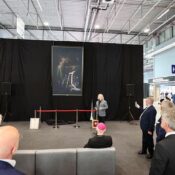
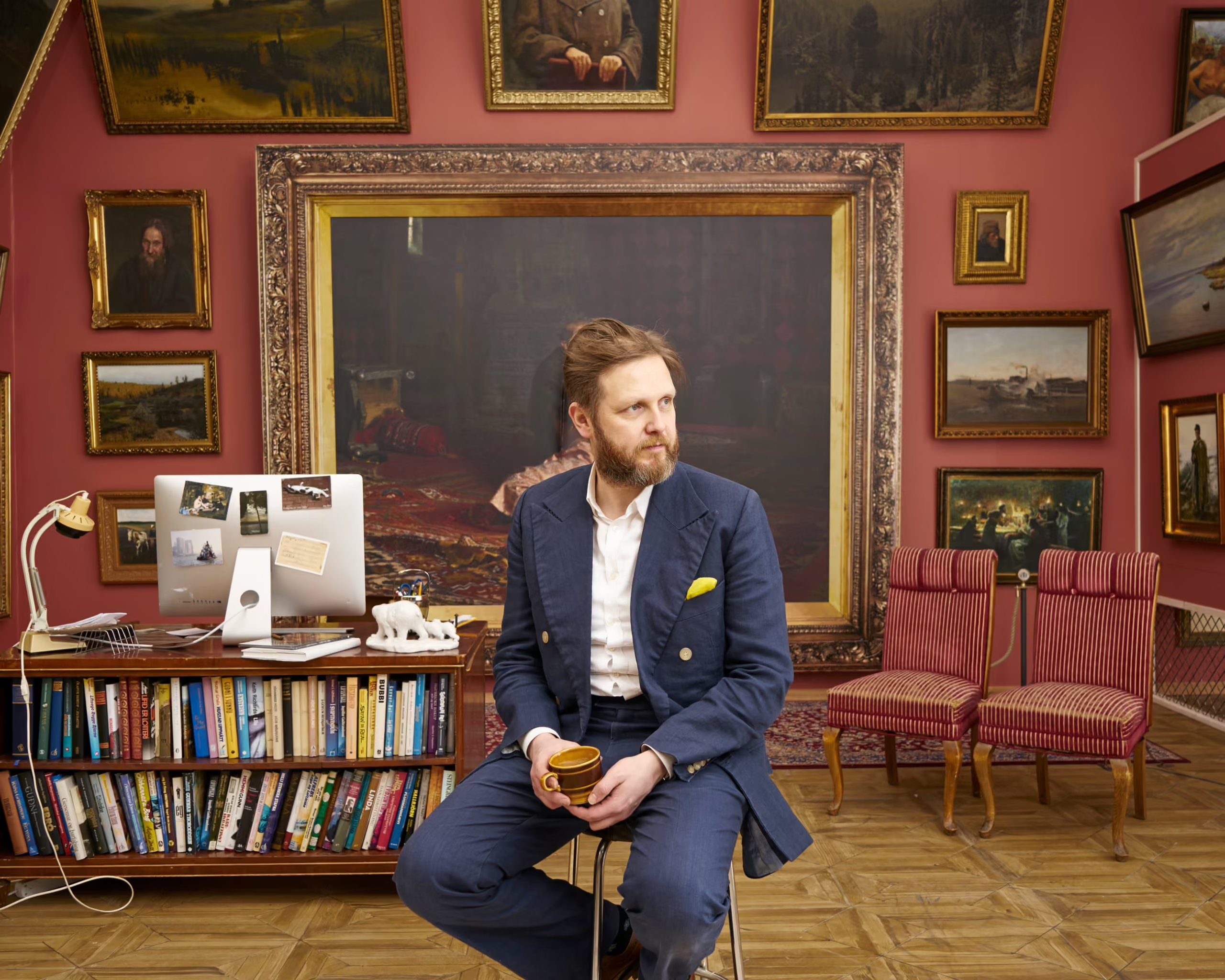
In Melbourne, a major exhibition dedicated to Icelandic artist Ragnar Kjartansson has drawn attention for the way it blurs the boundaries between performance, emotion, and storytelling. Spread across multiple screens, rooms, and looping installations, the show brings together some of his most well-known video works, including pieces that have developed near-mythic status in contemporary art circles.
What emerges is not a traditional exhibition, but an immersive experience built on repetition, music, and emotional contradiction—where humor and sadness coexist, and where performance slowly turns into something closer to lived reality.
The Artist Who Works Between Truth and Performance
Kjartansson’s practice is rooted in performance, but not in a straightforward theatrical sense. Instead, he constructs situations where authenticity and staging constantly overlap. His works often look simple: musicians playing in rooms, performers repeating gestures, or filmed interactions between family members.
But beneath that simplicity lies a deeper tension. The viewer is never fully sure where sincerity ends and performance begins. That uncertainty is intentional. It creates a space where emotional truth doesn’t depend on realism—it depends on duration, repetition, and vulnerability.
Over time, this approach has become central to his artistic identity, making him one of the most recognizable figures in contemporary video and performance art.
“The Visitors”: A Cult Artwork About Isolation and Connection
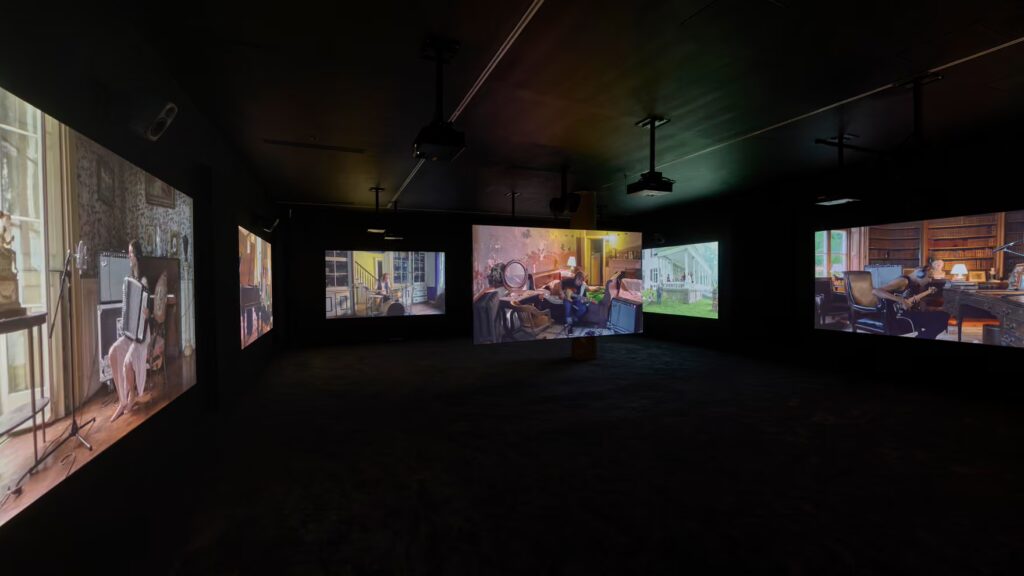
One of the key works in the exhibition is the nine-screen installation The Visitors, widely considered one of the most influential artworks of the 21st century.
Filmed in a decaying historic mansion in upstate New York, the piece shows musicians in separate rooms, each performing alone. There is no shared space, no direct interaction, yet together they create a single evolving musical composition.
The effect is paradoxical. The work feels both fragmented and unified at the same time. Each performer exists in isolation, yet their sounds merge into something deeply emotional and cohesive.
This tension has helped the piece develop a strong global following. Viewers often describe it as unexpectedly moving, even overwhelming in its simplicity. Online recordings and discussions continue to circulate years after its creation, reinforcing its status as a landmark in contemporary installation art.
At its core, The Visitors is not only about music or space—it is about emotional distance, human connection, and the fragile beauty of shared experience.
The Emotional Philosophy Behind the Work
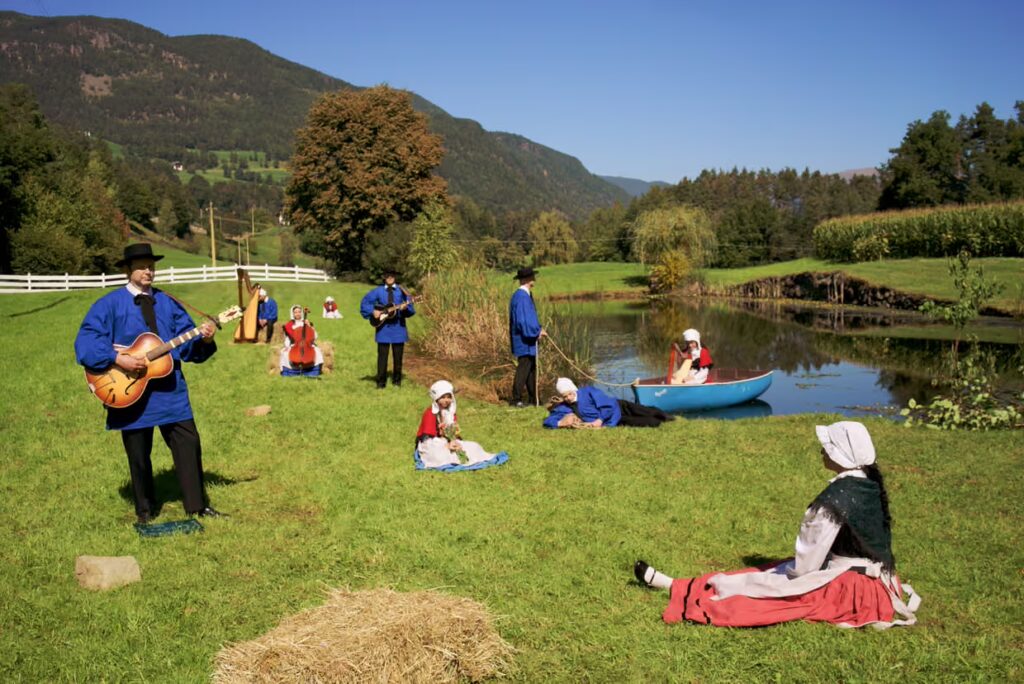
A defining idea behind Kjartansson’s art comes from a personal reflection shared with him by his father: that it is both beautiful and sad to be human.
This duality runs through much of his work. His installations rarely aim for resolution. Instead, they hold opposing emotions in tension—joy alongside grief, humor alongside discomfort, intimacy alongside estrangement.
Rather than simplifying emotional experience, his work expands it, allowing contradictions to coexist without needing to be resolved.
This is especially visible in his long-duration performances, where repetition transforms simple actions or phrases into something ritualistic. Over time, the viewer stops seeing repetition as redundancy and begins to experience it as emotional accumulation.
Music as Structure, Memory, and Emotion
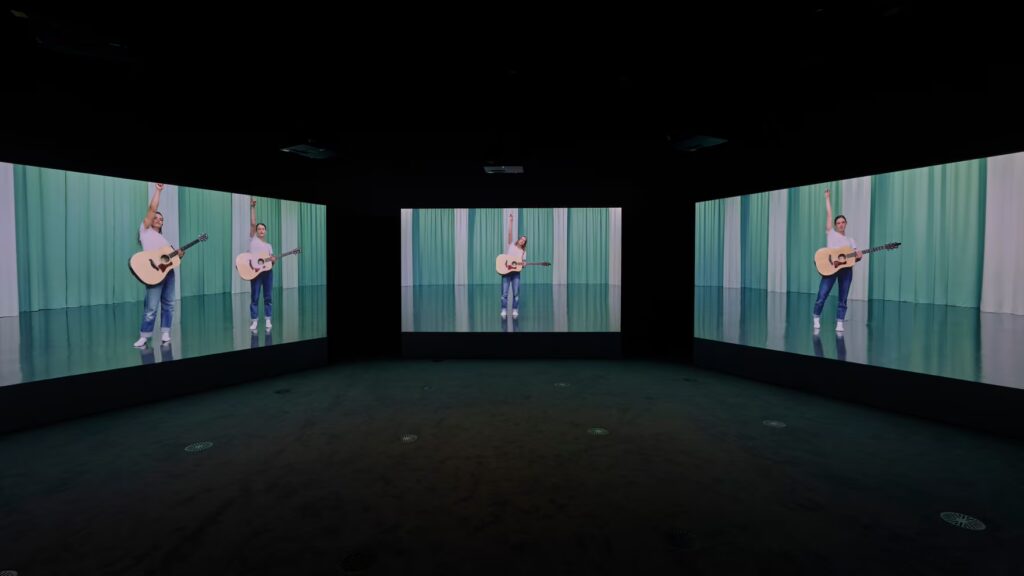
Music plays a central role in Kjartansson’s artistic language. Many of his works are built around looping songs, repeated lyrics, or continuous live performances.
The musical references span a wide range—from classical composers to pop culture icons and contemporary experimental musicians. These influences are not used as background decoration but as structural tools that shape the emotional rhythm of the work.
The repetition of sound creates a hypnotic atmosphere. Viewers are drawn into a shared temporal experience, where time feels stretched and altered. This effect is often described as meditative, almost devotional.
In this sense, his installations resemble modern rituals more than conventional exhibitions.
From Performance to Ritual
Over the years, Kjartansson’s practice has increasingly resembled ritualistic performance. The repetition of actions, songs, and gestures creates a sense of ceremony, even when the content is humorous or absurd.
Some works unfold over extended periods, requiring endurance from performers and sustained attention from viewers. This duration changes the meaning of what is being seen. A simple act, when repeated long enough, becomes something symbolic.
This transformation is key to his artistic impact. It shifts the viewer’s focus from narrative to experience, from plot to presence.
New Works and Changing Tone
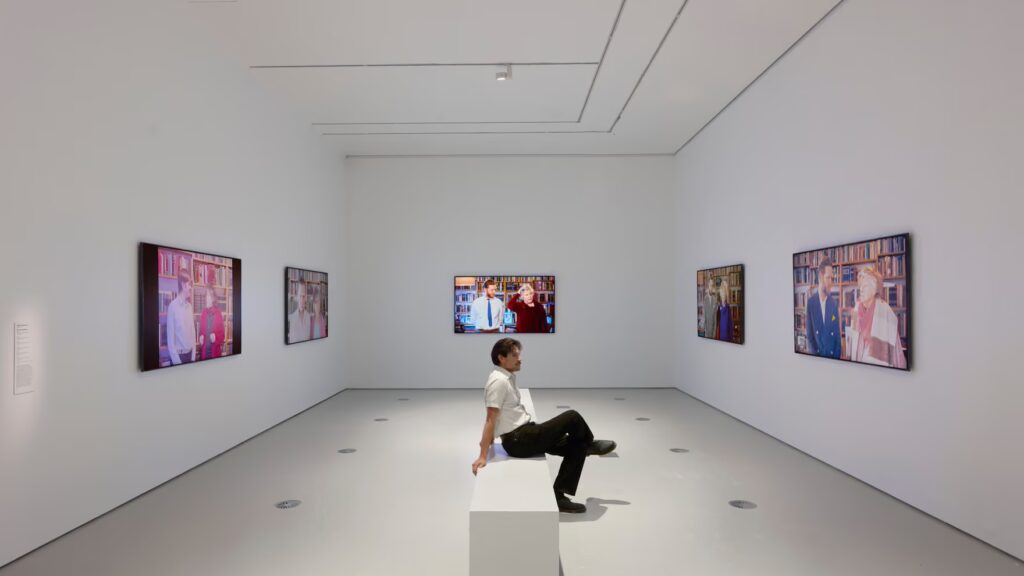
More recent pieces presented in the exhibition reflect a shift in tone. While earlier works often carried a sense of openness and optimism, newer installations tend to feel more restrained and reflective.
Scenes of everyday life—dinners, swimming pools, domestic spaces—are presented in a way that highlights their quiet repetition. These images suggest comfort, but also subtle emptiness. Familiarity becomes a source of unease.
The works ask viewers to consider how global sameness affects personal experience. Even in different countries and cultures, the structures of daily life often look increasingly identical.
This observation introduces a quieter, more contemplative layer to his practice.
Beauty, Sadness, and the Human Condition
At the heart of Kjartansson’s work is a persistent idea: that emotional contradiction is not something to be resolved but something to be experienced.
His installations do not aim to comfort or explain. Instead, they invite viewers into states of reflection where humor, melancholy, and beauty overlap.
In this way, the work becomes less about interpretation and more about presence. It encourages viewers to remain with feelings rather than move past them.
This is what gives his practice its lasting impact. It does not offer answers—it creates emotional space.
A Contemporary Language of Devotion
Although his work is firmly rooted in contemporary art, it often borrows the structure of older traditions, particularly ritual and devotion.
Repetition, duration, music, and collective attention all echo forms of spiritual practice. Yet the content remains secular, grounded in everyday human experience.
This combination creates a unique tension: the form feels sacred, but the subject remains ordinary. That contrast is where much of the emotional power resides.
Conclusion: An Art of Endurance and Feeling
The exhibition presents Ragnar Kjartansson not as a traditional storyteller or conceptual provocateur, but as an artist of emotional endurance. His works unfold slowly, requiring patience and openness from the viewer.
Across screens, songs, and performances, what remains constant is a focus on shared human experience—its fragility, repetition, and contradiction.
In the end, the work does not ask to be decoded. It asks to be felt.