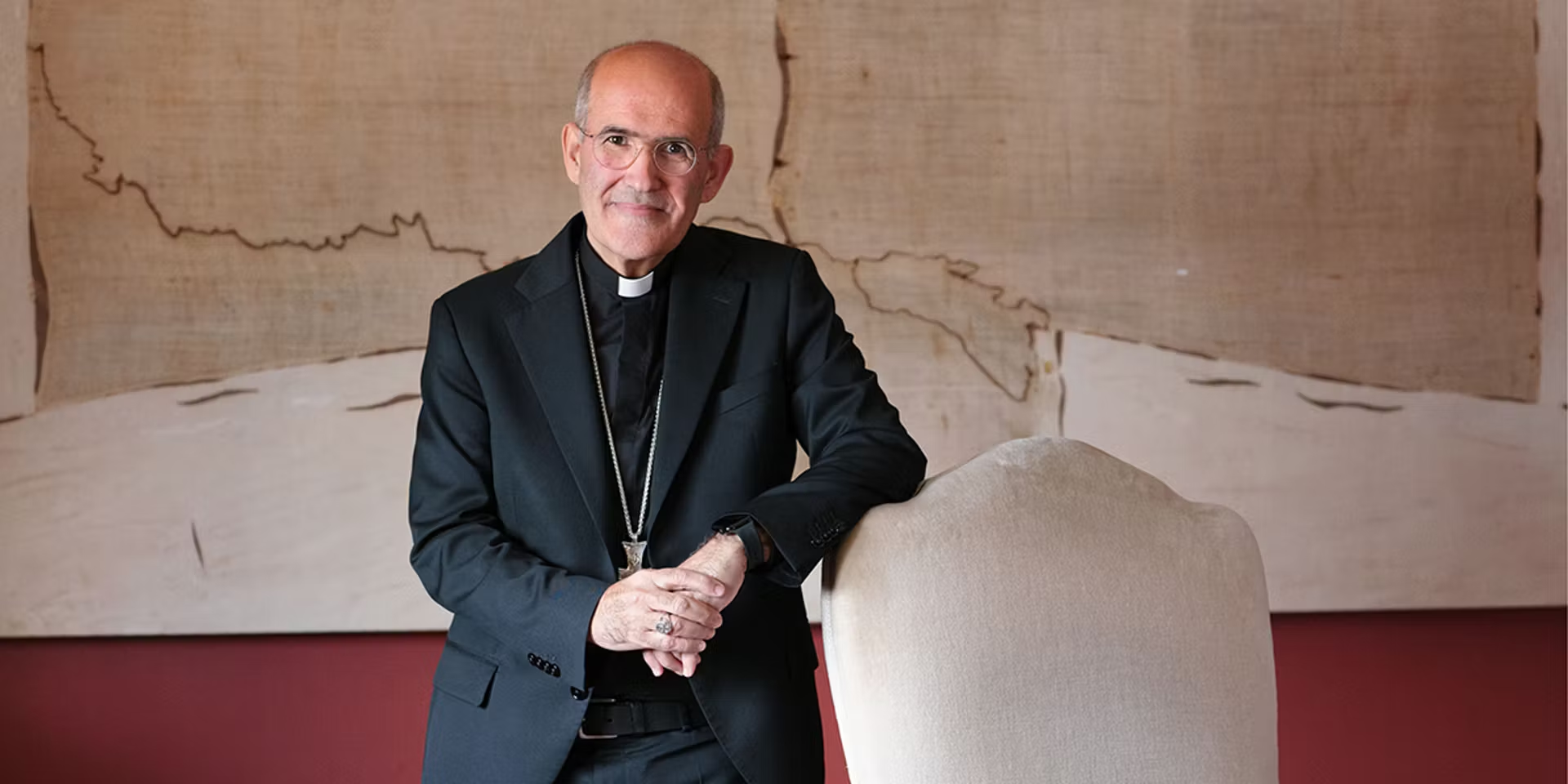
Cardinal José Tolentino de Mendonça has emerged as one of the most distinctive voices within the modern Catholic Church, known not only for his theological role but also for his deep engagement with literature, poetry, and contemporary art. In recent years, he has become a central figure in efforts to bridge the historical traditions of the Church with the evolving language of modern artistic expression.
His work as a cleric, intellectual, and cultural mediator places him at the intersection of spirituality and contemporary creativity, where dialogue between faith and art is increasingly relevant.
A Cardinal with a Literary Voice
Born in Portugal, José Tolentino de Mendonça is widely recognised as a poet and writer before being seen purely as a church official. His literary background has shaped his approach to theology and culture, allowing him to engage with contemporary artists, filmmakers, and thinkers in a more open and interpretive way than traditional ecclesiastical frameworks might suggest.
Over time, he has built relationships with figures from the worlds of literature, cinema, and visual arts, positioning himself as a cultural intermediary between the Vatican and the broader artistic community.
Inside the Vatican: Culture as a Mission
As head of the Dicastery for Culture and Education, Tolentino de Mendonça plays a key role in shaping the Vatican’s cultural policy. From his office overlooking St. Peter’s Square, he reflects on the relationship between sacred tradition and modern creativity.
He often draws attention to the symbolic power of classical religious art, such as the works of Michelangelo and Bernini, while also recognising the importance of contemporary artistic languages that speak to today’s audiences.
For him, sacred art is not merely historical heritage but a living expression of faith that continues to evolve.
The Sistine Chapel and the Power of Sacred Art
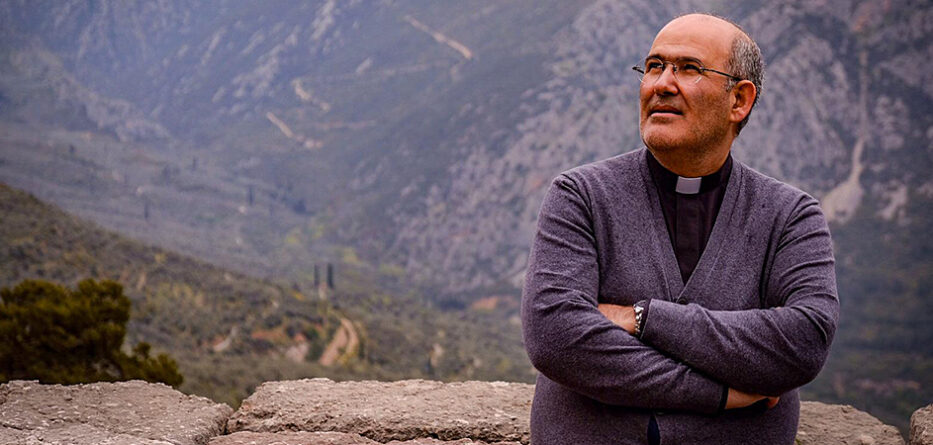
One of the most striking moments illustrating his connection with art occurred during the restoration of Michelangelo’s “Last Judgment” in the Sistine Chapel in early 2026. Observing the fresco from scaffolding high above the chapel floor, Tolentino de Mendonça described the experience as deeply moving.
He interpreted the work not only as a masterpiece of Renaissance art but also as a profound and enduring expression of faith. In his view, such works remain highly relevant today, offering a direct visual language of belief that continues to resonate with contemporary spiritual experience.
Bernini and the Living Tradition of Sacred Space
Tolentino de Mendonça often refers to the architecture of St. Peter’s Square, designed by Gian Lorenzo Bernini, as an example of how sacred art extends beyond individual works into spatial experience.
The sweeping colonnades surrounding the square, crowned with statues of saints, are for him more than decorative architecture. They represent a collective memory of lives dedicated to faith, forming a symbolic embrace of pilgrims and visitors entering the Vatican.
This interpretation reflects his broader view that sacred art is not static but deeply connected to lived experience and spiritual identity.
The Vatican Pavilion at the Venice Biennale
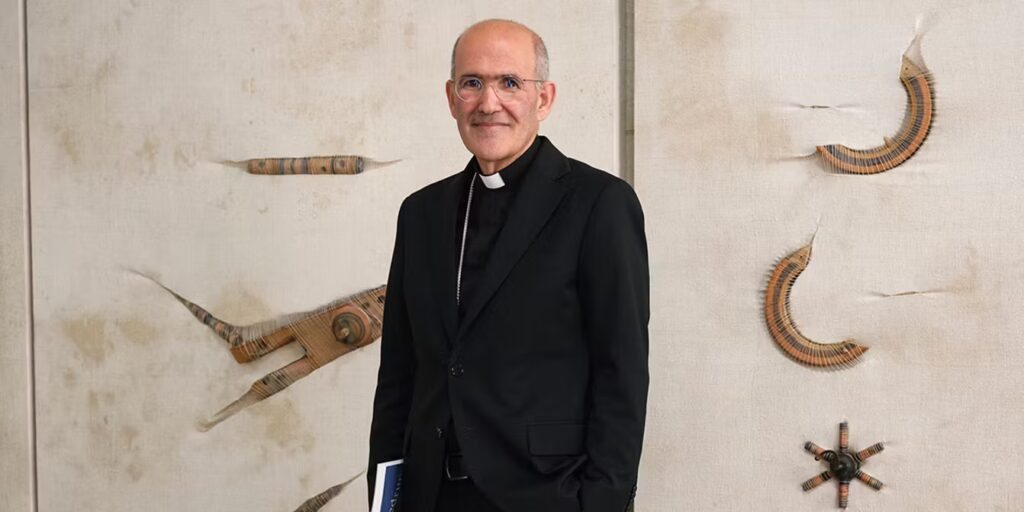
A major expression of his cultural vision has been his involvement in the Vatican Pavilion at the Venice Biennale, one of the most important international exhibitions of contemporary art.
Unlike traditional religious displays centred on classical religious imagery, the pavilion presented works by contemporary artists working across diverse media. The exhibition included sound compositions, poetry, and experimental installations by artists such as Meredith Monk, Suzanne Ciani, Patti Smith, and FKA Twigs, alongside contributions from poets and video artists.
The aim of the pavilion was not to replicate traditional sacred art but to open a dialogue between contemporary creativity and spiritual reflection.
Two Exhibition Spaces, One Concept
The Vatican Pavilion was organised across two distinct locations in Venice:
- the Carmelite Mystical Garden, a lesser-known site near the train station
- the Santa Maria Ausiliatrice complex, a former hospice transformed into a cultural exhibition space in the Arsenale district
This spatial division reflected the conceptual structure of the project, blending historical sacred environments with contemporary artistic reinterpretation.
The result was an exhibition that explored spirituality through modern artistic forms rather than traditional iconography.
Bridging Faith and Contemporary Culture
At the core of Tolentino de Mendonça’s approach is the idea that the Church should not remain distant from contemporary culture. Instead, it should engage with it actively, recognising that modern art can serve as a meaningful space for spiritual questioning and reflection.
His work challenges the perception that religious institutions and contemporary art exist in separate worlds. Instead, he promotes a vision in which both can interact, influence each other, and contribute to a shared cultural dialogue.
Contemporary Relevance of Sacred Art
Tolentino de Mendonça’s perspective highlights an important shift in how sacred art is understood today. Rather than being confined to historical churches or classical forms, sacred expression is increasingly found in experimental media, conceptual installations, and interdisciplinary projects.
This evolution reflects a broader transformation in cultural institutions, where spirituality is explored through diverse artistic languages that speak to modern audiences.
Conclusion
José Tolentino de Mendonça represents a new kind of cultural figure within the Catholic Church — one who embraces poetry, contemporary art, and experimental creativity as essential components of spiritual life.
Through his work at the Vatican and his involvement in international art initiatives such as the Venice Biennale, he continues to foster dialogue between tradition and innovation.
His vision suggests that sacred art is not a relic of the past but a living, evolving field — one that continues to find new forms of expression in the contemporary world.