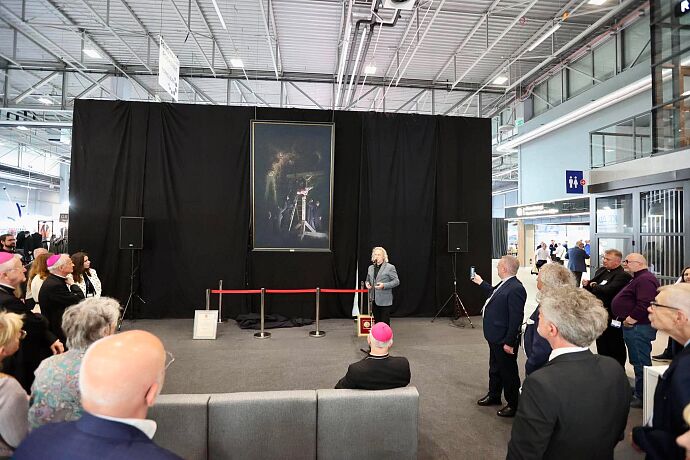
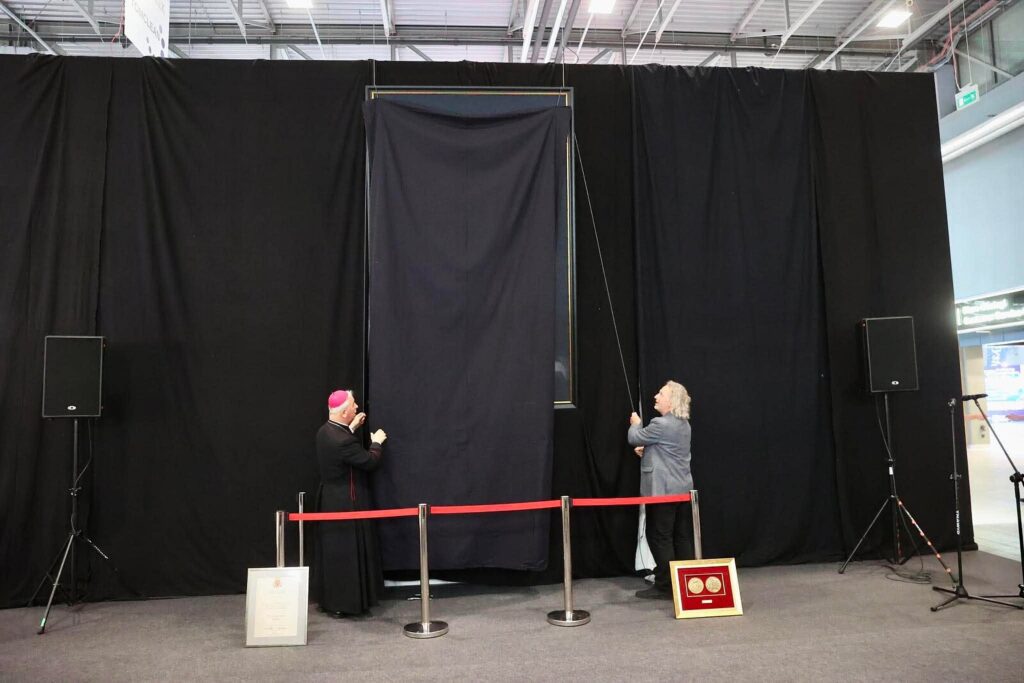
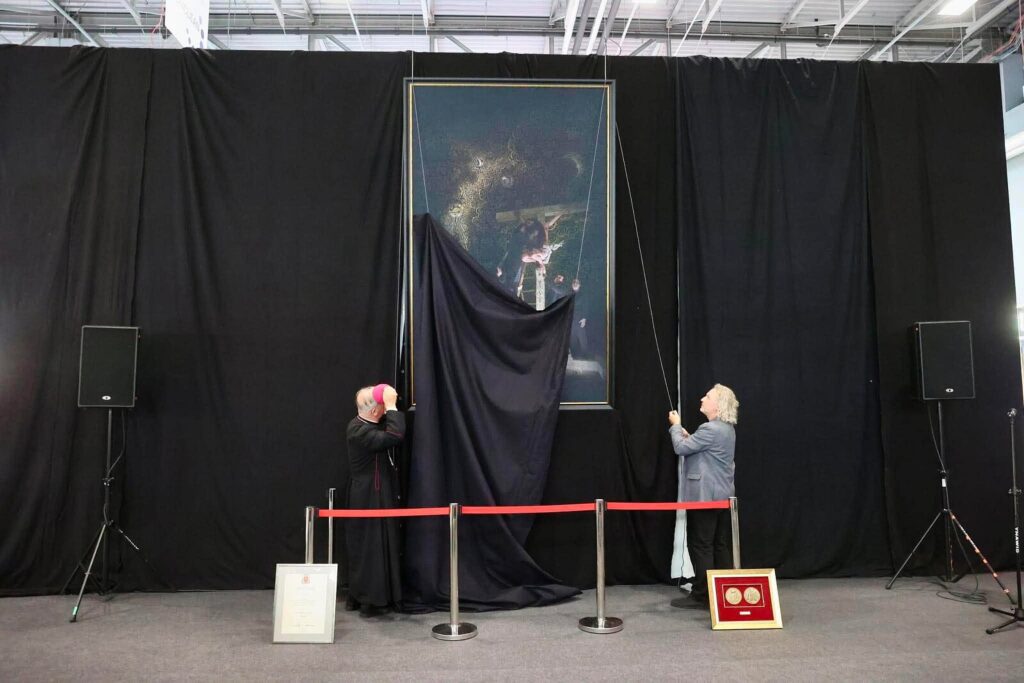
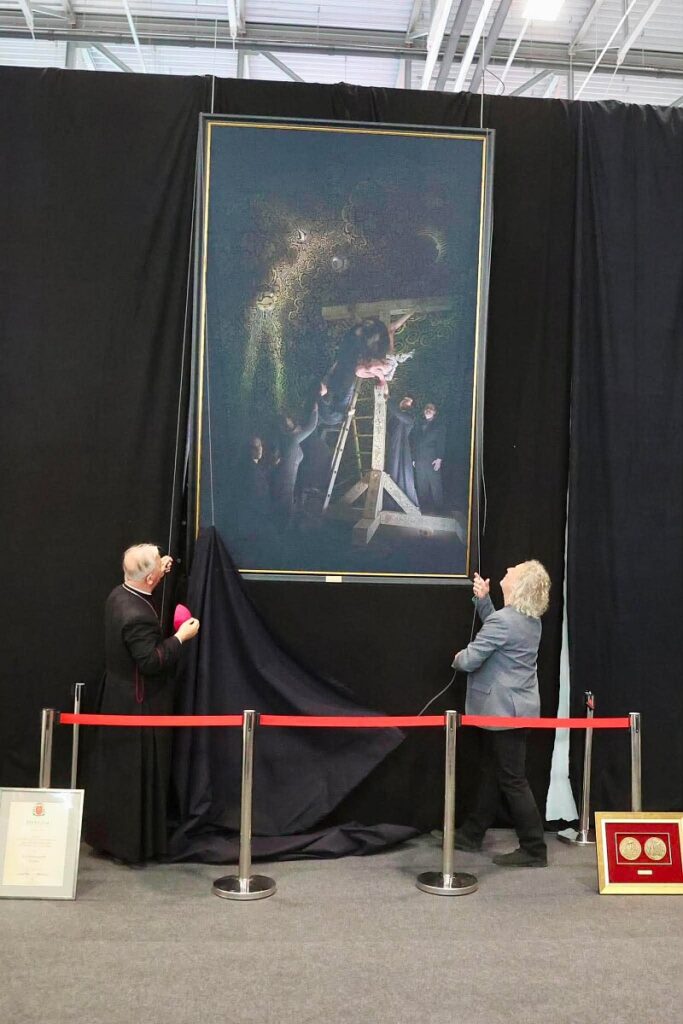
At this year’s Sacroexpo exhibition, one of the most talked-about moments was the premiere presentation of “PIETA XXI” by Piotr Barszczowski. From the very beginning, the installation drew attention not through spectacle alone, but through silence — the kind of silence that appears when viewers are confronted with something emotionally and symbolically dense.
Visitors gathered around the work in long pauses, often returning for a second look. Conversations formed spontaneously, moving between interpretation, personal reaction, and questions about how sacred themes should be expressed in contemporary visual culture.
A Modern Interpretation of One of Christianity’s Most Powerful Motifs
“PIETA XXI” revisits the classical theme of the Pietà — the Virgin Mary holding the body of Christ — one of the most enduring images in Christian art history.
Rather than repeating the traditional iconography, Barszczowski deliberately breaks away from the familiar visual language associated with Michelangelo’s Renaissance masterpiece. Instead, he constructs a new symbolic structure shaped by contemporary experience, technological aesthetics, and theological reflection.
The result is not a reproduction of a sacred image, but a reinterpretation of grief, compassion, and maternal love through a 21st-century lens.
The Artist: Between Theology, Design, and Visual Experiment
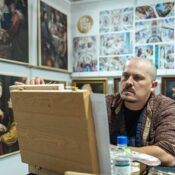
Piotr Barszczowski is not only a visual artist but also a photographer, designer, educator, and theologian. His interdisciplinary background is clearly reflected in the work, which combines artistic experimentation with conceptual depth.
He is known for exploring how traditional religious themes can be translated into modern visual languages without losing their emotional or spiritual core.
In “PIETA XXI”, this approach becomes especially visible. The work stands at the intersection of photography, light-based media, and experimental techniques, forming what the artist describes as a “new visual grammar” for sacred emotion.
“Neostatized Glass”: Technique as Meaning
A defining feature of the installation is Barszczowski’s signature method, referred to as “neostatized glass.” This technique merges photographic imagery with layered light effects and digital processing, producing a hybrid visual surface that shifts depending on the viewer’s position.
The material itself becomes part of the message. Light is not just illumination but narrative — it reveals and obscures, stabilizes and destabilizes meaning.
This dynamic quality reinforces the emotional ambiguity of the subject matter, inviting viewers to experience the work not as a fixed image but as a changing encounter.
Reimagining Maternal Suffering in the Present Day
At the center of the work lies a question posed by the artist: how can the suffering, compassion, and love of a mother for her son be expressed today?
Instead of relying on traditional iconographic representation, Barszczowski introduces symbolic reinterpretations that shift the emotional focus into contemporary context.
One of the most discussed elements is the presence of a ladder, which the artist uses as a metaphor for agency, intervention, and modern responsibility.
According to his interpretation, the ladder suggests a woman who does not only mourn but actively responds — a figure shaped by present-day social awareness and the instinct to act, assist, and protect.
He extends this idea further, describing collective involvement, where “more women help her save the child,” transforming the scene into a shared act of care rather than a solitary moment of grief.
Symbolism and Reinterpretation of Christ’s Body
Another striking visual decision is the portrayal of Christ’s body in a way that evokes vulnerability and infancy.
The form is intentionally softened and reimagined, resembling a newborn resting on the chest rather than a traditional depiction of death.
This shift reframes the narrative from finality toward origin — from death toward birth — introducing a cyclical reading of suffering, life, and renewal.
The interpretation encourages viewers to reconsider familiar theological imagery through emotional immediacy rather than historical familiarity.
Audience Reaction: Emotion, Debate, and Reflection
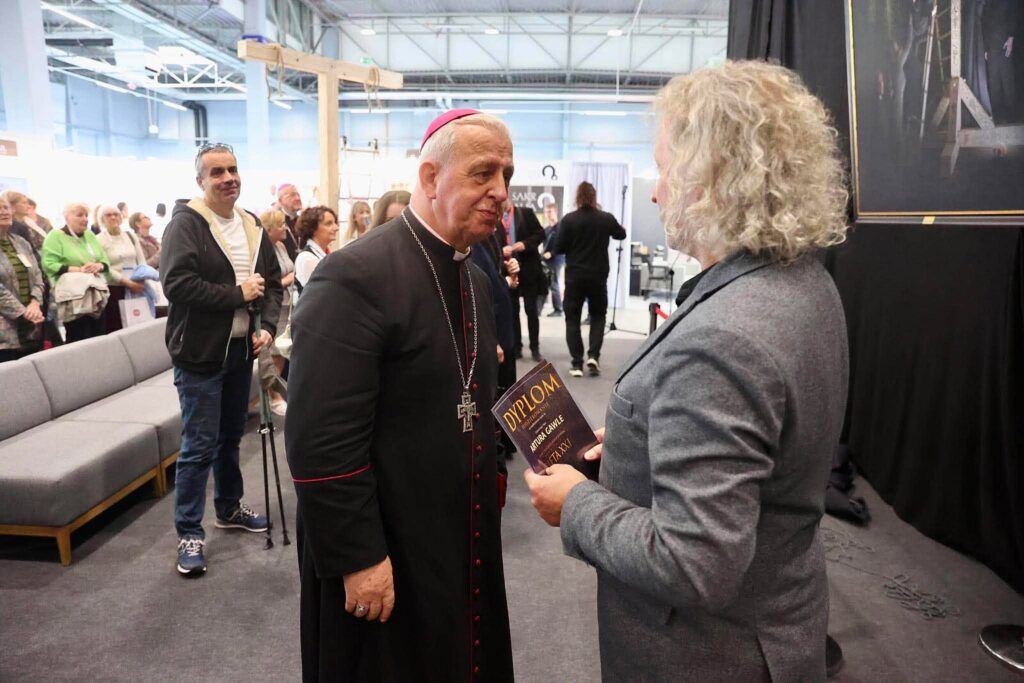
The premiere quickly became a focal point of discussion within the exhibition space.
Some visitors were drawn to the technical innovation and visual composition, while others focused on the emotional weight of the reinterpretation. Many described the work as unsettling, not because of shock value, but because it disrupted established visual expectations of sacred art.
Across conversations, recurring themes emerged:
- the tension between tradition and innovation
- the role of sacred imagery in contemporary culture
- the boundaries between theology and artistic freedom
- the emotional accessibility of religious symbolism today
Rather than offering clear answers, the work generated layered questions — precisely the kind of engagement the exhibition aims to encourage.
Sacroexpo as a Space for Contemporary Sacred Dialogue
The presentation of “PIETA XXI” reinforced Sacroexpo’s role as a platform where religious tradition and modern artistic expression intersect.
The exhibition continues to position itself not only as a display of sacred art, but as a space for dialogue between artists, theologians, and audiences navigating the evolving language of spirituality.
In this context, Barszczowski’s work stands as an example of how classical themes can be reactivated rather than preserved in static form.
Conclusion: A Work That Resists Indifference
“PIETA XXI” ultimately functions less as a finished statement and more as an open field of interpretation. It does not aim to replace tradition, but to question how tradition survives in contemporary visual culture.
By merging technology, symbolism, and theological reflection, Piotr Barszczowski creates a work that insists on emotional engagement rather than passive viewing.
As many visitors noted, it is precisely this demand for reflection — and the discomfort it can produce — that makes the piece memorable.
Sacroexpo once again demonstrates that sacred art today is not confined to heritage alone, but continues to evolve through new forms, languages, and questions that remain deeply human.