A cross-cultural seminar titled Matter and Spirit brought together American and Chinese visual artists in a shared exploration of how Christian faith can be expressed through contemporary art. Held across major Chinese cities including Beijing, Shanghai, and Nanjing, the program created a traveling exhibition that emerged directly from these encounters.
Rather than functioning as a traditional academic exchange, the seminar operated as a lived artistic dialogue—one in which participants compared not only techniques and styles, but also the deeper cultural conditions that shape how spiritual meaning is expressed visually.
A Collaborative Seminar Across Borders
The project brought together around ten American artists and ten Chinese artists, selected for their engagement with visual art and spiritual themes. Participants included painters, printmakers, curators, and educators working within very different artistic ecosystems.
The seminar was structured as an immersive experience. Artists traveled together, visited cultural and historical sites, and spent extended time discussing their work in informal and studio-like settings. These exchanges were later translated into a traveling exhibition curated under the title Matter + Spirit: A Chinese/American Exhibition.
A key goal of the program was not only to produce art, but to expand how artists understand the relationship between faith, material culture, and contemporary visual language.
Christian Art in a Changing Global Landscape
The seminar took place against a broader demographic shift in global Christianity. Over the past century, the center of the Christian world has moved significantly away from Europe and North America.
Today, a majority of Christians live in Africa, Asia, and South America, reshaping the cultural and intellectual landscape of the faith. This shift has major implications for artists working with Christian themes, as new regional traditions, aesthetics, and social realities increasingly define how spirituality is expressed.
In regions such as Latin America and sub-Saharan Africa, vibrant forms of Pentecostal and charismatic Christianity have also influenced visual and cultural production, further diversifying Christian artistic expression worldwide.
Finding Christian Artists in China
One of the key challenges of the project was identifying Christian artists within China’s contemporary art scene. This was made possible through established networks of scholars, curators, and artists who already operated within Christian intellectual and artistic circles.
These networks included educators, gallery directors, and independent artists who form part of a growing Christian intellectual presence in China’s cultural landscape. While Christianity remains a minority religion, its presence among educated professionals, including artists, has grown significantly in recent decades.
However, this environment is also shaped by political sensitivities. Artistic expression related to religion can sometimes face restrictions if it is perceived as politically sensitive, adding a layer of complexity to how Christian themes are explored publicly.
Two Artistic Contexts: Freedom and Constraint
One of the central themes that emerged from the seminar was the difference between artistic freedom and social freedom in different cultural environments.
In the United States, Christian imagery exists within a highly secularized art world. Artists are free to reference religious themes, but often struggle with the perception that overt Christian symbolism feels outdated or clichéd in contemporary high-art contexts.
In contrast, Chinese Christian artists operate in a context where Christianity is a minority tradition. Here, religious imagery is often perceived as more provocative and conceptually interesting within contemporary art discourse. Christian themes can function as a form of cultural commentary or even subtle dissent.
This creates a paradox: where American artists may have freedom but face cultural skepticism, Chinese artists may have greater conceptual traction but operate within more sensitive political boundaries.
Artistic Approaches: Symbolism, Suffering, and Translation
The works discussed within the seminar reveal a wide range of approaches to Christian imagery.
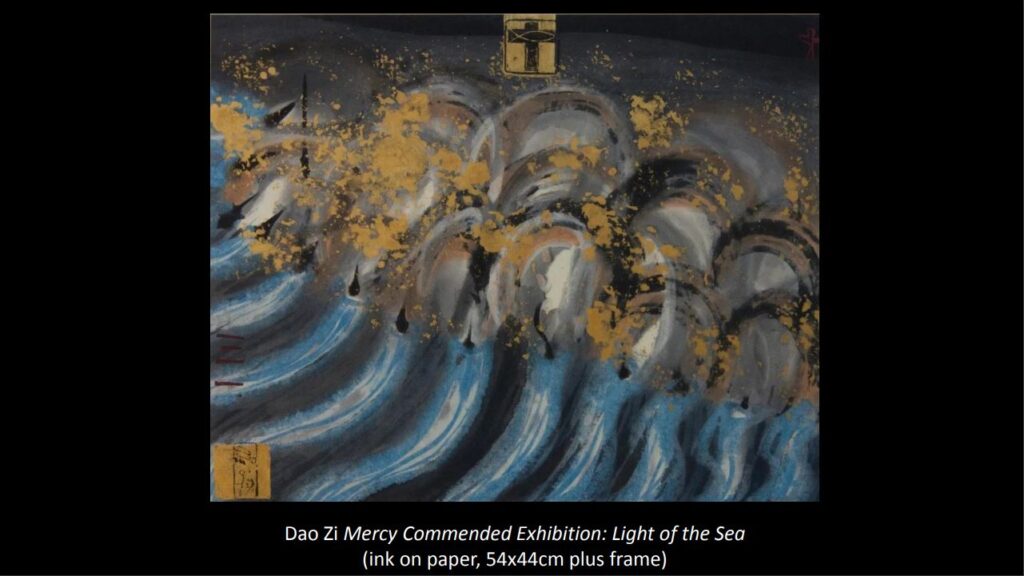
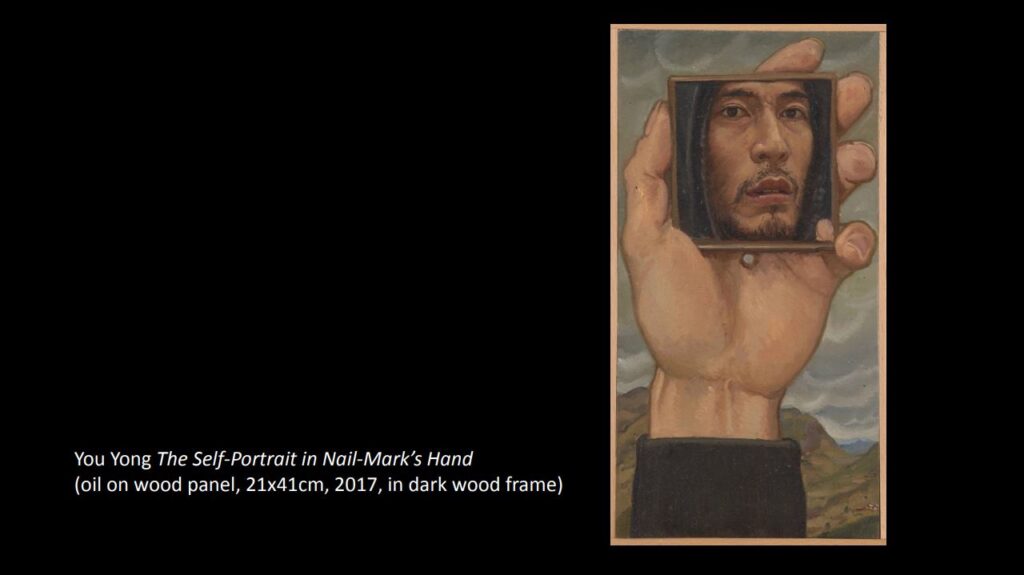
Some Chinese artists integrate Christian motifs into traditional ink painting, combining classical techniques with themes of suffering, martyrdom, and spiritual hope. In certain works, biblical references are reframed through Chinese visual traditions that emphasize nature, scale, and philosophical reflection.
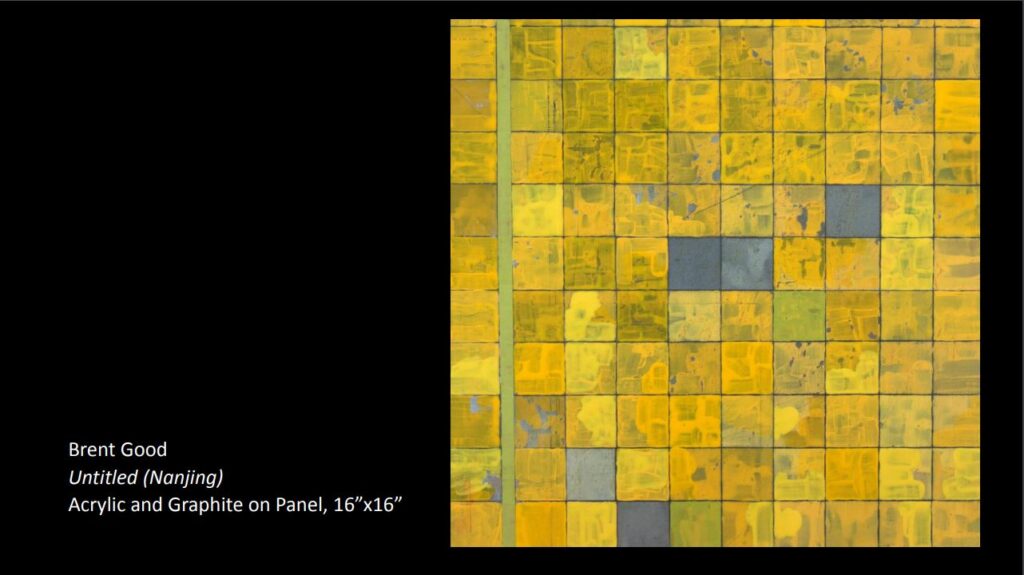
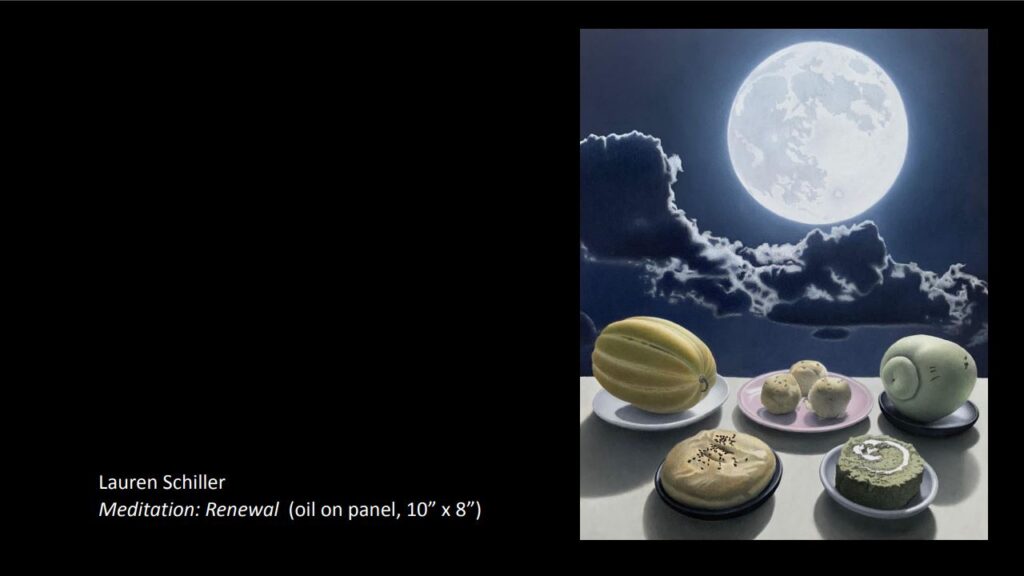
American artists, meanwhile, often reflect on material culture, ritual objects, and historical memory. Their works may draw inspiration from sites of trauma and remembrance, translating those experiences into abstract or symbolic visual forms.
Across both groups, there is a shared interest in how spiritual experience can be expressed through material form—whether through color, texture, composition, or symbolic imagery.
Dialogue Through Making Art
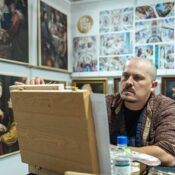
A defining feature of the seminar was the close interaction between artists from both countries. Participants lived and worked together, frequently discussing their art through interpreters and informal conversations.
These exchanges were not always easy. Differences in language, artistic training, and conceptual frameworks required constant negotiation. Yet this very difficulty became part of the creative process.
Artists compared sketches, projected images of their work, and discussed themes such as suffering, hope, transcendence, and cultural identity. Over time, mutual understanding developed not only through translation of language, but through translation of artistic intent.
Artistic Freedom and Spiritual Expression
A recurring topic in the dialogue was how Christian spirituality can be expressed visually in environments shaped by different cultural expectations.
In China, artists often engage with Christian themes in ways that highlight existential struggle, social tension, or historical trauma. In the United States, the challenge is often the opposite: how to make religious imagery feel fresh, credible, and relevant within a highly pluralistic and secular art world.
Despite these differences, both groups shared a concern with how faith can be communicated in a material, visual form that resonates beyond doctrine or tradition.
Debates Within Chinese Christian Art
Within the Chinese group itself, there were internal debates about artistic style and direction.
Some artists favored conceptual approaches, emphasizing abstraction, symbolism, and engagement with contemporary philosophical questions. Others preferred representational painting, drawing inspiration from classical European traditions such as Northern Renaissance art, which they saw as deeply expressive of human dignity and emotional depth.
These differing approaches led to active discussion about what constitutes meaningful Christian art in a Chinese context, and how global influences should be integrated or resisted.
Learning Across Cultures
One of the most significant outcomes of the seminar was the mutual recognition of artistic seriousness on both sides.
American artists observed the strong technical training and discipline present among Chinese painters. Chinese artists, in turn, were surprised by the openness of American participants regarding their faith commitments, which challenged their expectations about Western secularism in contemporary art.
Despite cultural and political differences, both groups discovered shared concerns about how to represent spiritual experience in a modern world shaped by materialism, technology, and rapid social change.
Conclusion: Matter, Spirit, and Artistic Translation
The Matter and Spirit seminar demonstrated that Christian visual art today exists within a complex global dialogue. Rather than a single tradition, it is a field shaped by cultural exchange, historical memory, and differing political and artistic conditions.
Through travel, collaboration, and conversation, American and Chinese artists developed new ways of understanding how faith can be translated into visual form. Their work suggests that spiritual expression in art is not fixed, but continuously reshaped by context, culture, and encounter.
In this sense, the exhibition is not only a collection of artworks—it is a record of translation between worlds.