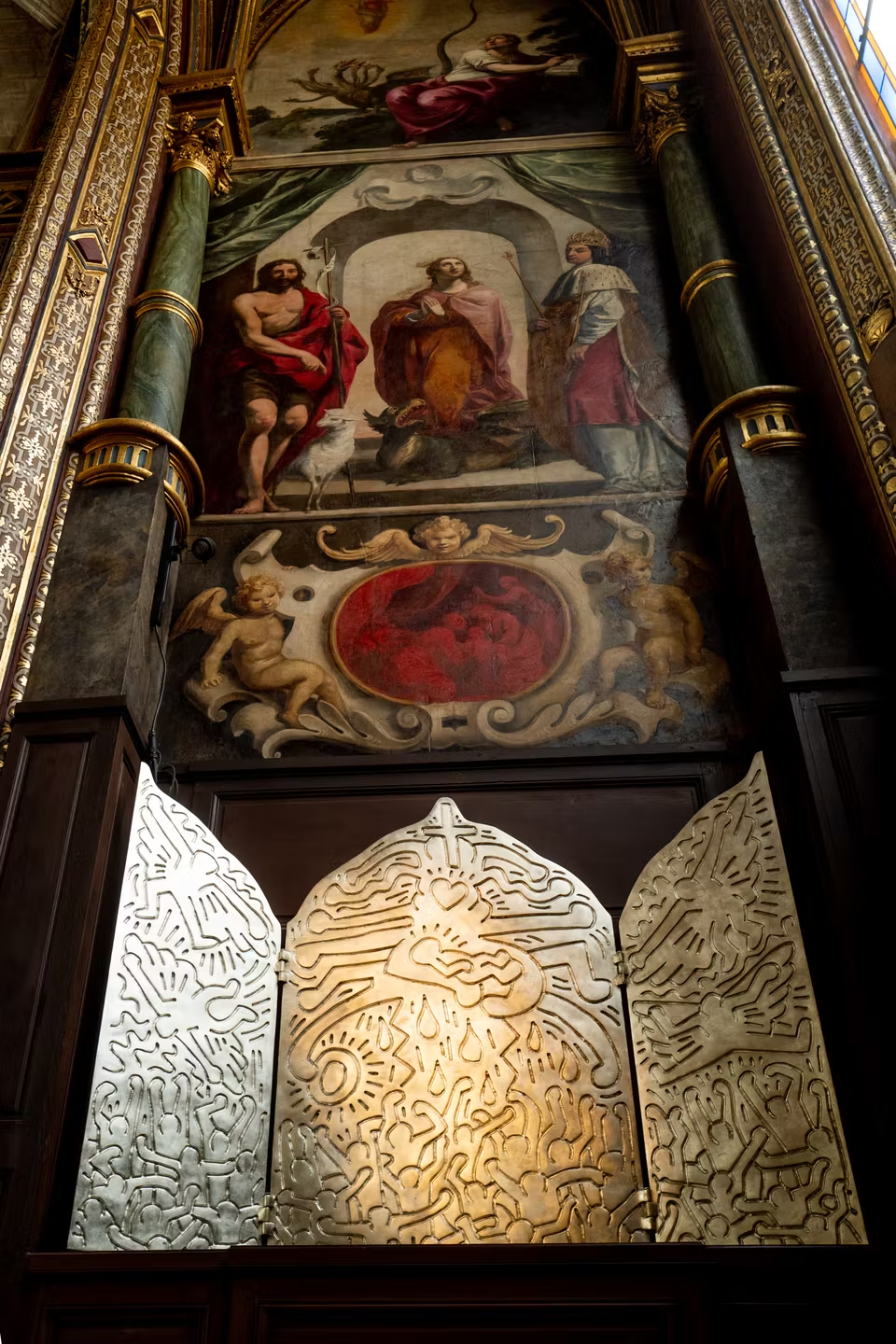
In the heart of Paris, opposite the bustling Forum des Halles, the church of Saint-Eustache—often called the city’s “artists’ church”—holds an unexpected artistic treasure. On its altar sits a bronze triptych that quietly bridges contemporary street art and sacred tradition: The Life of Christ, one of the final works associated with Keith Haring (1958–1990).
At first glance, the piece feels both familiar and surprising. Familiar, because its visual language is unmistakably Haring’s—bold lines, simplified forms, rhythmic movement. Surprising, because it exists within a religious setting, framed by architecture and ritual that seem far removed from the artist’s graffiti origins in New York’s subway system.
A Work Between Pop Art and Spiritual Symbolism
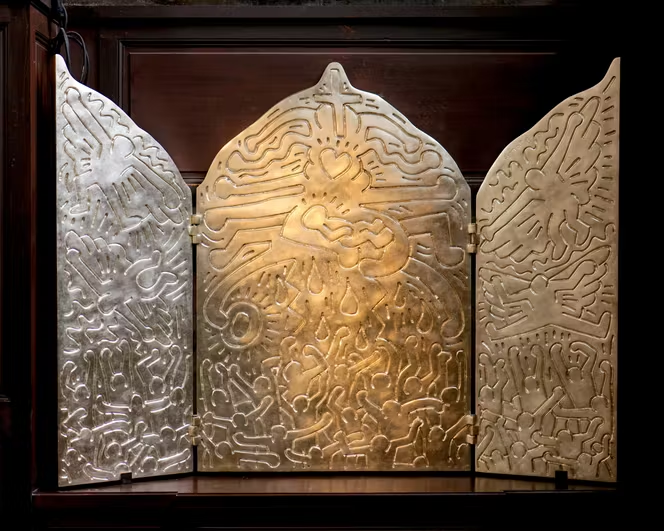
The triptych, finished with a white-gold patina, depicts a series of figures that merge religious iconography with Haring’s distinctive visual vocabulary. Angels, a child-like figure, and a central form with multiple arms appear across the panels, arranged in a dynamic composition that suggests movement, energy, and transformation.
Haring’s style, often described as both playful and profound, lends itself unexpectedly well to spiritual themes. The simplicity of his lines does not reduce meaning—it amplifies it. In this work, sacred imagery is filtered through a visual language shaped by urban culture, activism, and accessibility.
The result is a piece that feels less like a traditional religious artwork and more like a contemporary meditation on life, energy, and transcendence.
Keith Haring: Art, Activism, and Legacy
Keith Haring became one of the most recognizable figures in contemporary art during the 1980s. Emerging from New York’s graffiti scene, he developed a visual language rooted in public space, accessibility, and social engagement.
His work often addressed urgent issues of his time, including inequality, sexuality, and the AIDS crisis. Haring himself died at the age of 31, at the height of the epidemic, which has shaped the way his legacy is understood today.
Despite his early death, his artistic influence has only expanded. His works are now held in major museums around the world, and his visual language continues to appear in fashion, design, activism, and public art.
The presence of The Life of Christ in a Parisian church adds another layer to this legacy, situating his work within a spiritual and architectural context he did not live to fully witness.
Saint-Eustache: The “Artists’ Church” of Paris
Saint-Eustache is not an ordinary church in Parisian cultural life. Located in one of the busiest areas of the city, it has long been associated with artistic experimentation and cultural dialogue.
Over time, it has hosted concerts, installations, and works by contemporary artists, earning its informal reputation as an “artists’ church.” This openness has allowed it to function as a rare meeting point between religious space and modern artistic practice.
Within this setting, Haring’s triptych becomes part of a broader tradition of artistic encounters—where sacred architecture is not only preserved but actively reinterpreted through contemporary creativity.
A Hidden Work in Plain Sight
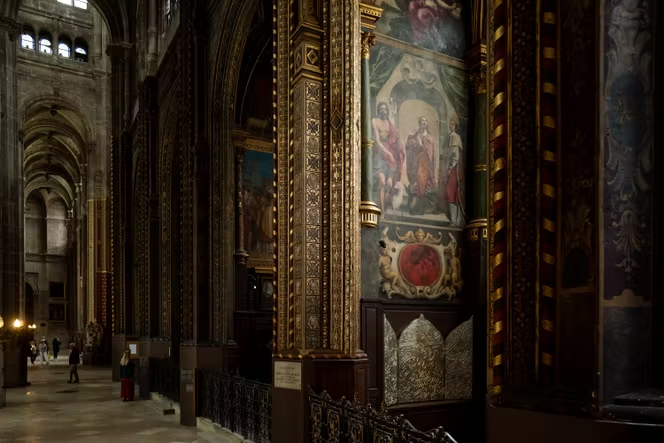
Although art specialists have known about the presence of Haring’s triptych since the early 2000s, many visitors to Saint-Eustache pass it without noticing. Its placement within the chapel, combined with poor lighting and surrounding architectural detail, means that it does not immediately draw attention.
This subtle presence adds another dimension to the work. Unlike museum displays designed to highlight and isolate artworks, here the piece exists as part of a living space. It is embedded within the rhythms of worship, tourism, and everyday passage.
The experience of encountering it is therefore accidental rather than directed—more discovery than exhibition.
Art Between Sacred and Secular Space
The installation of The Life of Christ in a church environment raises broader questions about how contemporary art interacts with religious spaces.
Rather than separating sacred art from modern artistic practice, Saint-Eustache allows both to coexist. In this context, Haring’s work does not replace traditional religious imagery but joins it, creating a layered visual environment shaped by multiple eras and styles.
This blending reflects a wider cultural shift in which churches, museums, and public institutions increasingly function as shared spaces for art, memory, and interpretation.
A Contemporary Vision of the Sacred
What makes Haring’s triptych particularly striking is not only its subject matter but its visual approach. His figures, stripped down to essential lines and forms, evoke a sense of universality. They are not tied to a single cultural tradition or artistic canon.
Instead, they operate in a space between abstraction and narrative, where meaning is suggested rather than explicitly defined.
Within the context of Saint-Eustache, this ambiguity becomes especially powerful. The work does not impose a single interpretation of the sacred—it opens a space for reflection.
Conclusion: A Meeting Point of Worlds
Keith Haring’s The Life of Christ at Saint-Eustache represents more than an unusual placement of a contemporary artwork in a religious setting. It is a meeting point between different artistic worlds: street art and sacred iconography, modern expression and historical architecture, public culture and private reflection.
Seen within the quiet atmosphere of the chapel, the work becomes something more than a visual object. It becomes a point of dialogue—between artist and viewer, between past and present, and between art and spirituality.